
What makes a snack purchase meaningfully support a community, rather than simply sound good in an advertisement? Broad promises can be hard to distinguish from clear commitments. A credible social impact snack brand explains its purpose and how its work connects to it, while offering a product people genuinely enjoy.
That connection can feel especially personal when a snack carries cultural heritage, too. Topas Chin Chin is a family-owned business making handcrafted Nigerian chin chin from a family recipe. Its seven flavors include original, coconut, and cinnamon. The company says proceeds support families in need with food and help children return to school, but it does not promise a particular result from any individual purchase.
This article explains what to look for in a snack brand’s social mission, how to assess its claims, and why specific commitments matter more than sweeping marketing language. It also explores how Topas Chin Chin brings Nigerian snacking heritage together with a purpose centered on family and community, so you can consider both the product and the mission before choosing.
Key Takeaways
- A social impact snack brand connects its product or business to a stated purpose. Look beyond feel-good language to understand what the commitment means.
- Assess a brand’s claims by checking its purpose, how support works, what evidence it shares, and whether it provides updates.
- Distinguish stated intentions from measured outcomes or claims independently verified by others.
- Topas Chin Chin describes a mission to support families in need with food and children’s schooling, without promising a specific result from an individual purchase.
- Choose a snack that suits your taste and values, then use clear questions about scope, dates, and measurement to assess its social mission.
What Makes a Social Impact Snack Brand More Than a Good Cause?
A social impact snack brand links the food it sells, or the way it does business, to a stated purpose intended to benefit people or communities. That purpose might focus on food access, education, fair opportunities for workers, or support for a particular community. The label alone doesn’t tell you what the brand does. Look for a clear explanation of its commitment and how its work connects to it.
What does social impact mean in the snack industry?
Social impact describes an intended benefit for people, not a badge that proves results. A snack business might direct resources toward community programs, build employment opportunities, or support families. These are possible approaches, not requirements every brand must meet.
It also helps to distinguish related ideas. Sustainability usually concerns environmental effects, such as packaging or production practices. Charitable giving means contributing to a cause, while mission-led branding communicates a company’s values. These can overlap with social impact, but none automatically explains the scope or outcome of a community commitment.
Some businesses choose a formal structure that makes social and environmental aims part of how they operate. A Benefit corporation is one example of a legal business form associated with pursuing public benefit. A brand’s legal structure can offer context, but shoppers should still look for specific information about its purpose and actions.
Why should a snack’s mission be clear?
Clear language helps you understand what a brand intends to support, how its product relates to that purpose, and what questions remain. “We support families” sounds caring, but you may still want to know what support means, who it is intended to reach, and whether the company reports progress. Specific explanations make those questions easier to answer without assuming an outcome.
The mission matters alongside the snack itself. Flavor, texture, ingredients, and cultural connection all affect whether a product suits you. But a delicious snack doesn’t prove a social claim, just as a meaningful purpose doesn’t guarantee the product will match your taste. Consider both on their own merits.
A useful distinction: A social impact commitment is a brand’s stated plan to support people or communities. An impact outcome is a result supported by evidence. Keeping the two separate helps you recognize good intentions without mistaking them for verified change. It’s a practical starting point: enjoy the product, understand the purpose, and check what the brand can substantiate.
How to Evaluate a Social Impact Snack Brand’s Claims
A thoughtful mission deserves thoughtful questions. A social impact snack brand doesn’t need a glossy report to explain why its purpose matters, but it should make its commitment understandable. The University of Michigan Ross School of Business describes social impact as significant, positive change that addresses a social challenge. Use that idea as a starting point, then check what the brand actually says and shares.
What evidence should shoppers look for?
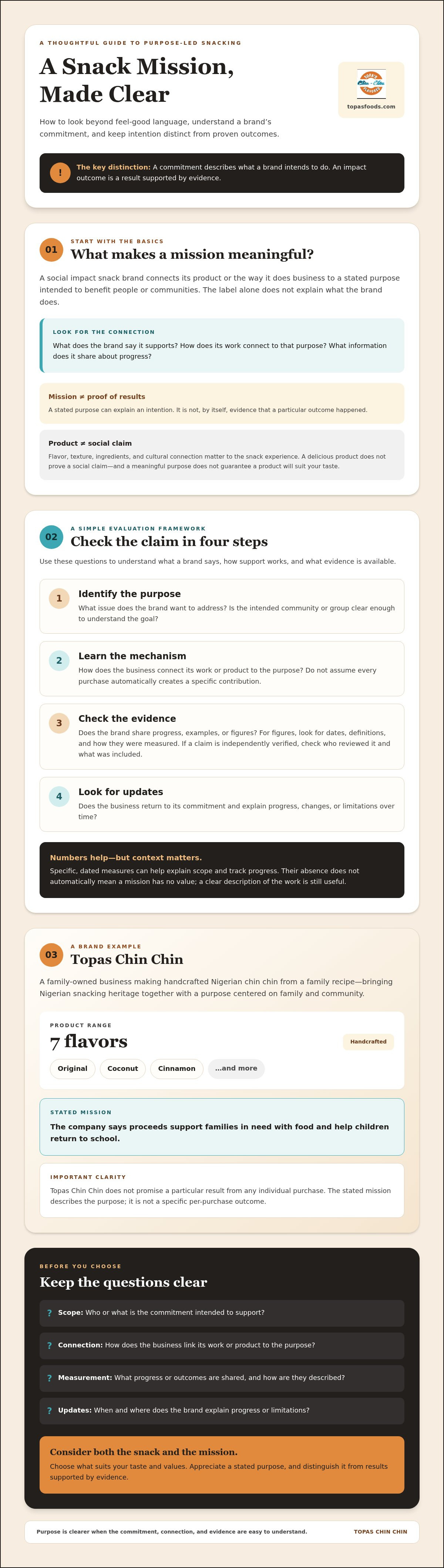
Use this four-step check to distinguish a stated intention from a result that has been measured or independently confirmed:
- Identify the purpose. What issue does the brand say it wants to address? Is the intended community or group described clearly enough to understand the goal?
- Learn the mechanism. How does the business connect its work or product to that purpose? Look for an explanation rather than assuming every purchase automatically creates a specific contribution.
- Check the evidence. Does the brand share progress, examples, or figures? For figures, look for dates, definitions, and an explanation of how they were measured. If a claim is independently verified, check who reviewed it and what was included.
- Look for updates. Does the business return to its commitment over time and explain progress, changes, or limitations?
Numbers can strengthen accountability, but their absence doesn’t automatically mean a mission has no value. Some forms of support are difficult to reduce to a single figure. A clear description of the work is still useful, while specific, dated measures can help readers understand its scope and follow progress.
Which questions help clarify a brand’s mission?
Ask what the business supports, how its activities connect to that purpose, and whether it tracks outcomes. Then check where and when it shares updates. These are reasonable questions, not accusations. Broad language is a reason to seek more detail, but it isn’t proof that a claim is false.
Pay attention to the difference between a commitment and a confirmed result. “We aim to support families” describes intent. A dated report with a stated method may help explain what happened. Unless the business explicitly confirms a per-order contribution, don’t assume each purchase triggers a fixed donation.
A quick shopper’s checklist: Name the purpose, understand the process, check the evidence, and look for updates. Treat a purchase as support for a stated mission, not a guarantee of an individual outcome. To see how Topas Chin Chin describes its family-support purpose, visit the Topas Chin Chin website.
Topas Chin Chin: A Family-Owned Snack Brand With a Give-Back Mission
Topas Chin Chin brings handcrafted Nigerian chin chin and a family-owned business purpose together. Chin chin is a familiar snack in Nigerian food culture, often shared during celebrations and as a gesture of hospitality. For Topas, it’s a way to share a taste of that heritage through a snack made from a family recipe, alongside a story rooted in family and community.
For readers considering what a social impact snack brand can look like in practice, this is a specific example of product and purpose being presented together. Topas makes chin chin in seven flavors, including original, coconut, cinnamon, mocha cappuccino, banana, vanilla, and strawberry. To learn more about the snack’s background and place in Nigerian food culture, explore this guide to Nigerian chin chin.
How do product, heritage, and purpose come together?
A family recipe can keep a food tradition present in everyday moments, from a snack shared at home to one offered to guests. Topas Chin Chin’s handcrafted approach connects its product to Nigerian heritage, while its family-owned story gives the business a personal foundation. The brand also honors the owners’ brother, Tonna, as part of its family story.
These details help explain the relationship between product and purpose, but they don’t prove a particular community outcome. For a closer look at the tradition behind the recipe, read about the original chin chin family recipe.
What does Topas Chin Chin say its give-back mission supports?
The company says proceeds support families in need, including by helping put food on tables and send children back to school. That is the stated focus of its mission. Topas does not specify a per-order donation amount or quantify how much support a particular purchase provides, so buying one bag shouldn’t be treated as a guarantee of a specific result.
This distinction describes the mission accurately without diminishing its purpose: a family-owned snack business connects its proceeds with a stated commitment to family support and children’s education. Look to the company’s own mission information for its current explanation, and treat any figures or outcome claims according to the evidence provided.
How to Tell Whether a Snack Brand’s Social Impact Is Transparent
Transparency isn’t about having the longest report or the biggest numbers. It means making a commitment understandable: what a business hopes to support, what it has done, and what it can’t yet confirm. When assessing a social impact snack brand, a dated update describing a specific activity is more useful than a broad statement such as “we’re making a difference.” It gives you something concrete to interpret, even if it doesn’t prove a broader outcome.
What are common signs of an unclear impact claim?
Phrases such as “giving back” or “changing lives” may express genuine values, but alone they leave important questions open. They don’t explain the purpose, the process, or who the commitment aims to support. That’s a reason to seek clarification, not enough evidence to label a brand misleading.
Numbers need context, too. A claim that a company “helped hundreds” is difficult to assess if it has no date, doesn’t define what “helped” means, or offers no explanation of how the figure was counted. Scope matters: does the claim cover one activity, a period of time, or the business’s work overall? You can ask, “Could you explain what this figure includes and how it was measured?”
How can brands communicate progress responsibly?
Useful updates distinguish three things: what the business has committed to do, what activities have taken place, and what outcomes have been confirmed. A brand might describe a planned initiative as a goal, report a completed activity as work done, and reserve claims about lasting change for results it can support with evidence. Dates and a consistent method make updates easier to compare over time.
Reporting can vary with a business’s size and resources. A small family business may share a concise explanation of its work, while a larger company may publish formal reports. In either case, look for clear scope, honest wording, and updates that don’t blur plans with results. If a brand claims independent verification, it should explain plainly what was reviewed.
Trust grows when a brand shares both what it has achieved and what it can’t yet prove. Being transparent about limits helps readers understand the boundaries of a claim and avoid mistaking intention for confirmed impact. To review how Topas Chin Chin presents its mission, visit Topas Chin Chin’s website.
Choosing a Social Impact Snack Brand That Fits Your Values
A snack can offer pleasure, curiosity, and a sense of connection. Choosing a social impact snack brand means considering those everyday qualities alongside its stated purpose, not setting taste aside or expecting one purchase to solve a larger challenge. Look for a product you’d genuinely enjoy, then decide whether the brand’s mission and the information it shares align with your values.
Which snack and mission deserve a place in your routine?
Start with your preferences. Consider flavor, texture, ingredients, and whether you’re curious to try a snack with cultural roots different from your usual choices. Then compare the brand’s stated focus with what matters to you. A mission may sound meaningful, but it’s your choice whether its purpose, process, and evidence meet your expectations.
Topas Chin Chin makes handcrafted Nigerian chin chin from a family recipe in seven flavors, with a variety pack for trying more than one. The flavors include original, coconut, cinnamon, mocha cappuccino, banana, vanilla, and strawberry. Check the product information to see what suits your preferences. The company’s stated mission focuses on supporting families in need, including helping provide food and send children back to school. Consider the snack and the purpose on their own terms, without assuming an individual order guarantees a specific outcome.
What are thoughtful next steps for curious shoppers?
Before deciding, revisit the key questions: What does the brand say it supports? How does its work connect to that purpose? Are updates, dates, or measurements available, and what do they demonstrate? Check the company’s product information and mission wording. If the support process or reported outcomes aren’t clear, asking the business directly is a reasonable next step.
You don’t need to find a perfect brand or treat every purchase as a donation. A considered choice can simply mean enjoying a snack, understanding the purpose attached to it, and being honest about what the available information does and doesn’t confirm. That leaves room for pleasure and care: good flavor, cultural discovery, and a mission you’ve taken time to understand.
If Nigerian chin chin sounds like a welcome addition to your snack table, you can explore Topas Chin Chin’s products and stated mission at your own pace.
Choose a Snack with Purpose and Clarity
A meaningful choice starts with two things: a snack you enjoy and a purpose you understand. When considering a social impact snack brand, look beyond warm language. Ask what the business supports, how its work connects to that aim, and whether updates distinguish intentions from confirmed outcomes. A purchase can align with your values without guaranteeing a specific result.
Topas Chin Chin brings Nigerian snacking heritage into the story through handcrafted chin chin made with a family recipe in seven flavors. The family-owned business honors the owners’ brother, Tonna, and says its mission supports families in need with food and children’s education. These are the company’s stated commitments, not a quantified promise about what any individual order will achieve.
If you’re curious to discover the flavors and learn how Topas describes its mission, explore Topas Chin Chin’s handcrafted Nigerian snacks. Browse the products, review the stated purpose, and choose with both enjoyment and care in mind.
Frequently Asked Questions
What is a social impact snack brand?
A social impact snack brand is a food business that connects its product or business activities with a stated purpose intended to benefit people or communities. Its focus might include food access, education, or employment, but brands don’t all support the same causes. The label alone doesn’t confirm results. Look for an explanation of the purpose and how the business says its work contributes to it.
How can I tell if a snack brand really gives back?
Look for a clearly described purpose, an explanation of how support happens, and updates that help you understand the work. If the brand shares figures, check for dates, definitions, and a measurement method. Ask whether outcomes are tracked and whether anyone independent verifies a claim. Broad language isn’t proof of wrongdoing, but it’s reasonable to ask the company for more detail.
Does buying a social impact snack guarantee a donation?
No. A purchase doesn’t automatically guarantee that a fixed amount goes to a cause or that a particular outcome follows. Some businesses say proceeds support a mission without specifying a per-order contribution. Check the brand’s wording to understand what it commits to and what evidence it provides. Treat a purchase as a choice to support the business and its stated purpose, not as a guaranteed individual donation.
What does Topas Chin Chin support with its proceeds?
Topas Chin Chin says its proceeds support families in need, including by helping put food on tables and send children back to school. This describes the company’s stated mission, not a quantified result or a guaranteed outcome from a specific order. Topas does not state a per-purchase donation amount. For current details, review the company’s mission information or ask Topas directly.
Are social impact snacks also made with natural ingredients?
Not necessarily. A brand’s social mission and its ingredients are separate considerations, so check the product information to see what each snack contains. Topas Chin Chin says its handcrafted chin chin is made with natural ingredients using a family recipe and is preservative-free. Those details apply to Topas, not to every mission-led snack. Review ingredient information to decide whether a product suits your preferences.
Can a small snack business make a meaningful social impact?
It can pursue a meaningful purpose, but business size alone doesn’t show the scale or results of its impact. Look for a clear explanation of what the company supports, how its work connects to that aim, and what it can report about progress. A small business may communicate its efforts differently from a large corporation. Judge the clarity and evidence of its claims rather than assuming either more or less impact.
What should I look for before choosing a mission-driven snack brand?
Consider the snack’s flavor and ingredients, whether its cultural story interests you, and whether its stated purpose aligns with your values. Then check how the brand says its support works, whether its updates are dated, and how it measures reported outcomes. If a claim or process is unclear, ask for clarification. Choose a product you’ll enjoy, while keeping the brand’s stated commitment separate from any outcome it hasn’t confirmed.


